
About All Tours Sunrise ToursSunset ToursPrivate ToursBike ToursFrom Bangkok ToursFrom Siem Reap Tours Directions Hours & Fees
Find Tours 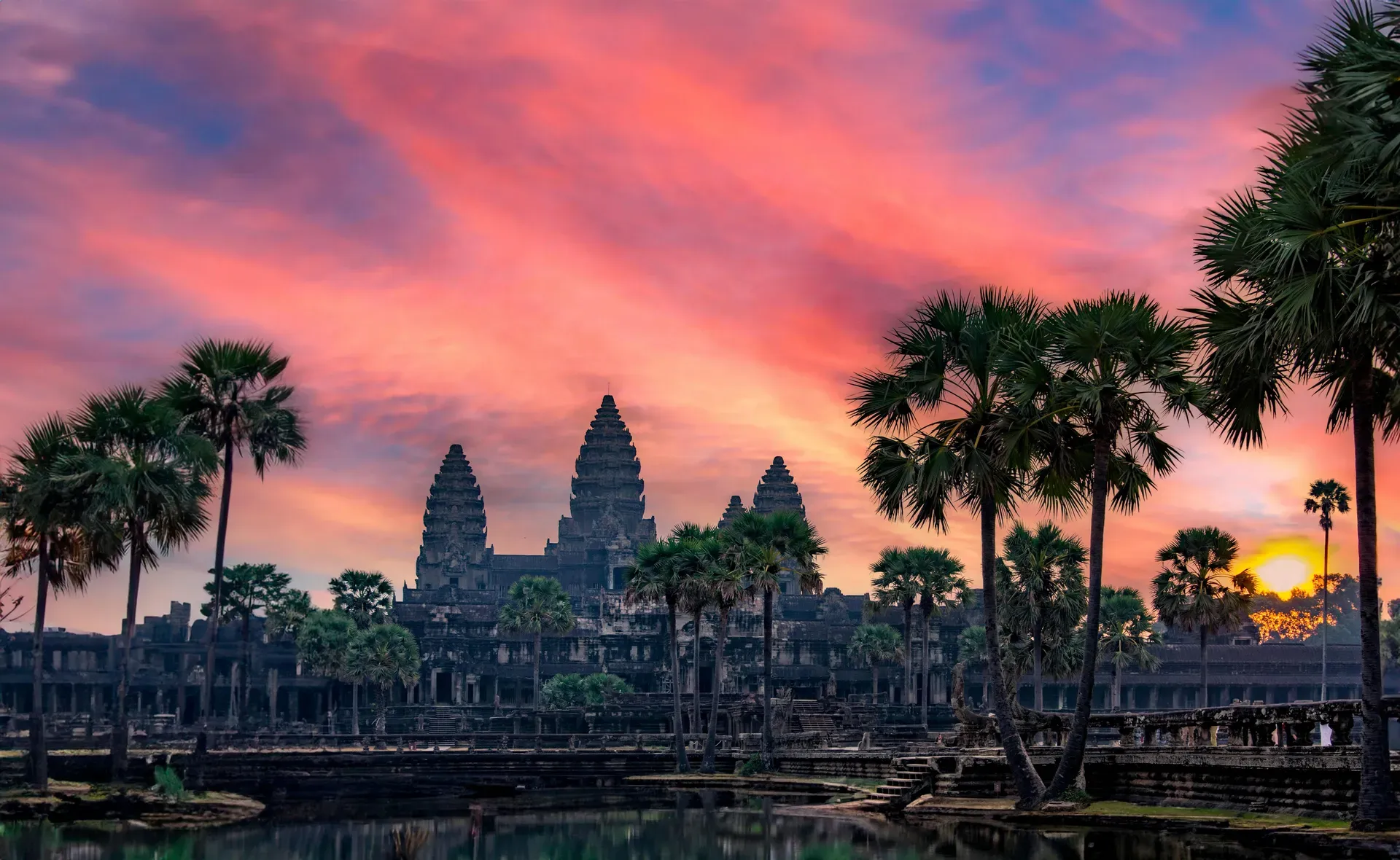
Originally constructed in the 12th century, this 162.6-hectare complex features a 65-meter central tower and over 1,200 square meters of intricate bas-relief carvings. Visitors can cross the 200-meter-wide moat to view classical Khmer architecture and watch the sunrise reflect over the northern pond.
Find Guided ToursAngkor Wat is the largest religious monument in the world by land area, covering 162.6 hectares within northwestern Cambodia's Angkor Archaeological Park. The complex is defined by its classical Khmer architecture, featuring a 200-meter-wide moat and an outer perimeter measuring 1.5 by 1.3 kilometers. Unlike most Khmer temples that face east, Angkor Wat is uniquely oriented toward the west.
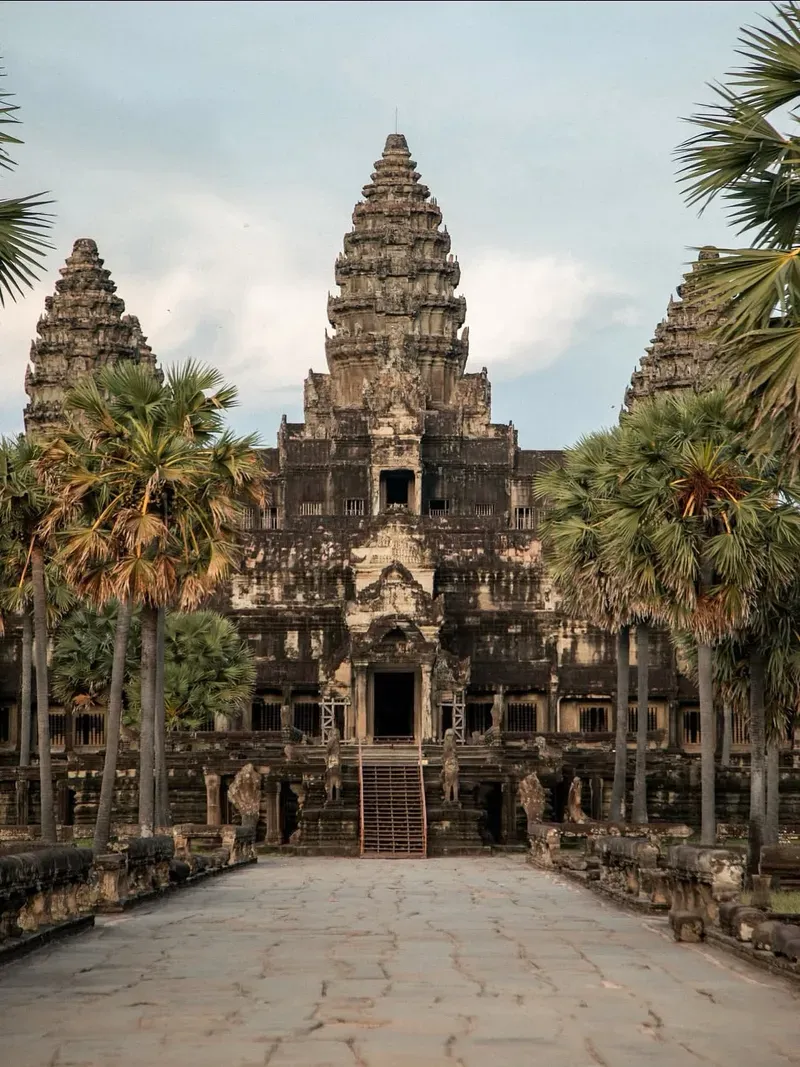
At the core of the site are three rectangular galleries and five central towers arranged in a quincunx, designed to represent the peaks of Mount Meru. The main central tower reaches a height of 65 meters above the ground. The temple is noted for its astronomical alignments and contains over 1,200 square meters of intricate bas-relief carvings depicting historical events and Hindu epics.
Construction began around 1113 AD during the reign of King Suryavarman II. It served as the state temple and capital city of the Khmer Empire. Building this massive complex took approximately 30 years to complete, requiring an estimated workforce of 300,000 laborers and 6,000 elephants. Originally constructed as a Hindu temple dedicated to the god Vishnu, its role shifted over the decades.
In 1177, the Chams sacked the city, prompting King Jayavarman VII to establish a new capital nearby. By the late 13th century, Angkor Wat transitioned from Hinduism to Theravada Buddhism, which remains its primary religious affiliation today. Designated a UNESCO World Heritage Site in 1992, it stands as the ultimate symbol of Cambodia and is famously featured on the national flag.
Discover the full history and cultural significance on our About page.
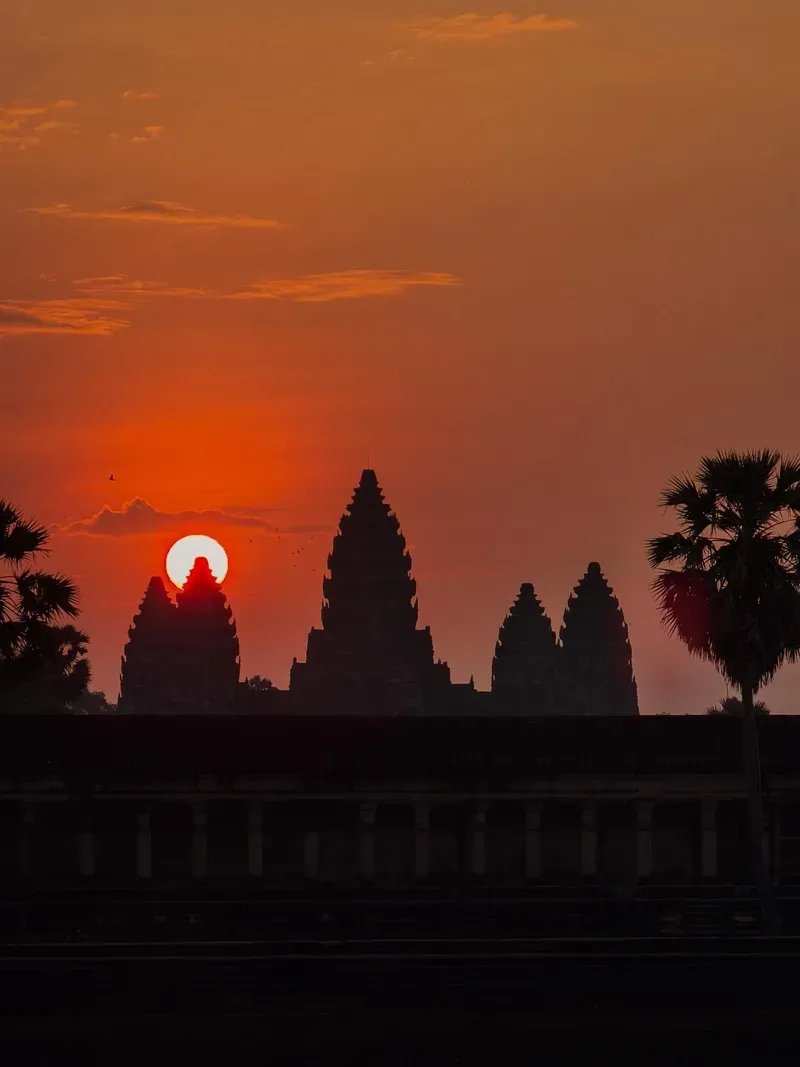
Arrive by 5:15 AM to secure a viewing spot at the Northern Reflection Pond. As dawn breaks, the rising sun illuminates the temple's five iconic towers, casting a perfect mirror image onto the water below. The builders deliberately oriented the complex west to create this astronomical alignment.
Ascend steep, narrow stairs to the highest tier of the temple. The Bakan limits entry to just 100 people at a time. From this vantage point near the 65-meter central tower, visitors gain clear panoramic views across the massive 162.6-hectare archaeological site and the surrounding forest.
Walk through the East Gallery to view the Churning of the Ocean of Milk. This specific 49-meter-long carving depicts a famous Hindu creation myth. The wider complex contains over 1,200 square meters of these detailed stone carvings, illustrating historical events and epics originally dedicated to Vishnu.
Inspect the temple walls to find over 1,700 unique stone carvings of celestial nymphs, known as Apsaras. Artisans crafted each figure with distinct hairstyles and facial expressions. These highly detailed elements took three decades to complete and represent the absolute pinnacle of 12th-century Khmer artistic achievement.
Hand-picked tours with free cancellation and verified reviews
 Free Cancellation
  Free Cancellation
  Free Cancellation 10h
  Free Cancellation 8h
  Free Cancellation
  Free Cancellation
 Free Cancellation
 The ideal time to visit Angkor Wat is between November and February when cool, dry weather makes exploring the vast 162.6-hectare complex comfortable. Visitors should avoid April due to extreme 40°C heat and September to October when peak monsoon rains cause potential flooding.
Temperatures soar during these months, peaking in April with extreme heat reaching 40°C. Visitors should avoid midday heat between 11:00 AM and 2:00 PM by resting in shaded areas.
The rainy season brings consistent precipitation to the region. The ancient stones and steep, narrow stairs become extremely slippery during these months, requiring visitors to exercise high caution while exploring.
September and October bring peak monsoon conditions, characterized by heavy rain and potential flooding across the archaeological park. Conditions improve dramatically in November as cool, dry weather finally arrives.
These are the optimal months to explore the site's extensive bas-reliefs and towering galleries. Cool, dry weather provides comfortable conditions for the long walks required to see the complex.
Angkor Wat is open daily from 5:00 AM to 6:00 PM. The official ticket office operates from 4:30 AM to 5:30 PM.
| Category | Price |
|---|---|
| 1-Day Pass | 37 USD |
| 3-Day Pass | 62 USD |
| 7-Day Pass | 72 USD |
| Children (under 12) | Free (passport required for age verification) |
Tickets, officially called the Angkor Pass, are not sold at the temple gates. Visitors must purchase them at the Angkor Enterprise Ticket Center on Road 60 or through their official website. Buying your pass online at least 24 hours in advance helps you avoid early morning ticket office queues.
For complete schedules and ticket prices, visit our Hours & Fees page.
The temple complex sits 6 kilometers outside Siem Reap Town and 51.4 kilometers from the Siem Reap-Angkor International Airport. Most visitors establish a base in the town before traveling to the site using local transport.
📍 Angkor Archaeological Park
Hiring a local tuk-tuk is the standard method for covering the 6-kilometer distance from Siem Reap Town. The driver will take you directly to the temples and wait for you between different archaeological sites. This daily arrangement provides reliable transit throughout the complex. Be cautious of drivers offering free airport rides, as they often demand inflated prices for this temple tour later.
Booking a private car provides an air-conditioned alternative for the 6-kilometer drive from Siem Reap Town. This option offers significant relief from the high tropical humidity between temple visits. Total pricing fluctuates based on the driver's English proficiency and the overall length of your scheduled tour. The vehicle remains with you throughout the day to navigate the sprawling 162.6-hectare archaeological park.
Cycling the 6-kilometer route from Siem Reap Town serves as a highly budget-friendly transport method. Riders must prepare for physically demanding conditions caused by extreme tropical heat and high humidity. Bring at least two to three liters of water per person to prevent rapid dehydration during the ride. You will also need to navigate the extensive park distances on your own power.
The new Siem Reap-Angkor International Airport is located 51.4 kilometers away from the temple complex. The official airport shuttle bus provides the most economical transit into Siem Reap Town. From the city center, you must arrange secondary transport to reach the actual archaeological park. This initial transfer takes about an hour before you can begin your temple visit.
For detailed transport options and routes, visit our Directions page.
The ticket office opens at 4:30 AM, but morning lines are long. Purchase your Angkor Pass online at least 24 hours prior to your visit. A 3-day pass costs 62 USD and allows enough time to see the main circuits without rushing. Children under 12 enter free with a passport.
Getting the iconic photo of the five towers reflected in water requires an early start. Arrive at the Northern Reflection Pond by 5:15 AM to claim a position. Leave your drone at home, as they are strictly banned without government permits. Tripods also face heavy restrictions.
Temple guards strictly enforce clothing rules across the 162.6-hectare site. Shoulders and knees must remain covered at all times. Avoid relying on a scarf as a wrap, because guards often reject this workaround at the upper Bakan level. Sleeveless shirts and short skirts will result in denied entry.
High humidity and tropical temperatures make walking the complex physically demanding. Bring at least two to three liters of water per person. Plan to avoid the extreme midday heat between 11:00 AM and 2:00 PM. Use this window to eat lunch in Siem Reap or rest in shaded areas.
Stay alert for individuals posing as monks who offer bracelets and then demand up to 20 USD. You should also watch out for aggressive monkeys on the grounds. Keep all food and plastic bags completely out of sight. Finally, avoid tuk-tuk drivers offering free airport rides to secure overpriced tours.
The temple terrain features uneven stones, sand paths, and extremely steep stairs lacking handrails. Closed-toe walking shoes are essential for navigating the site safely. The sandstone becomes highly slippery during the June to October monsoon season. Proper footwear helps prevent injuries while exploring the extensive galleries and central towers.
Bayon Temple is famous for the 216 massive stone faces carved into its structure. These faces are distributed across 54 distinct towers within the Angkor Thom complex. The sheer scale of the stonework makes it a major point of interest.
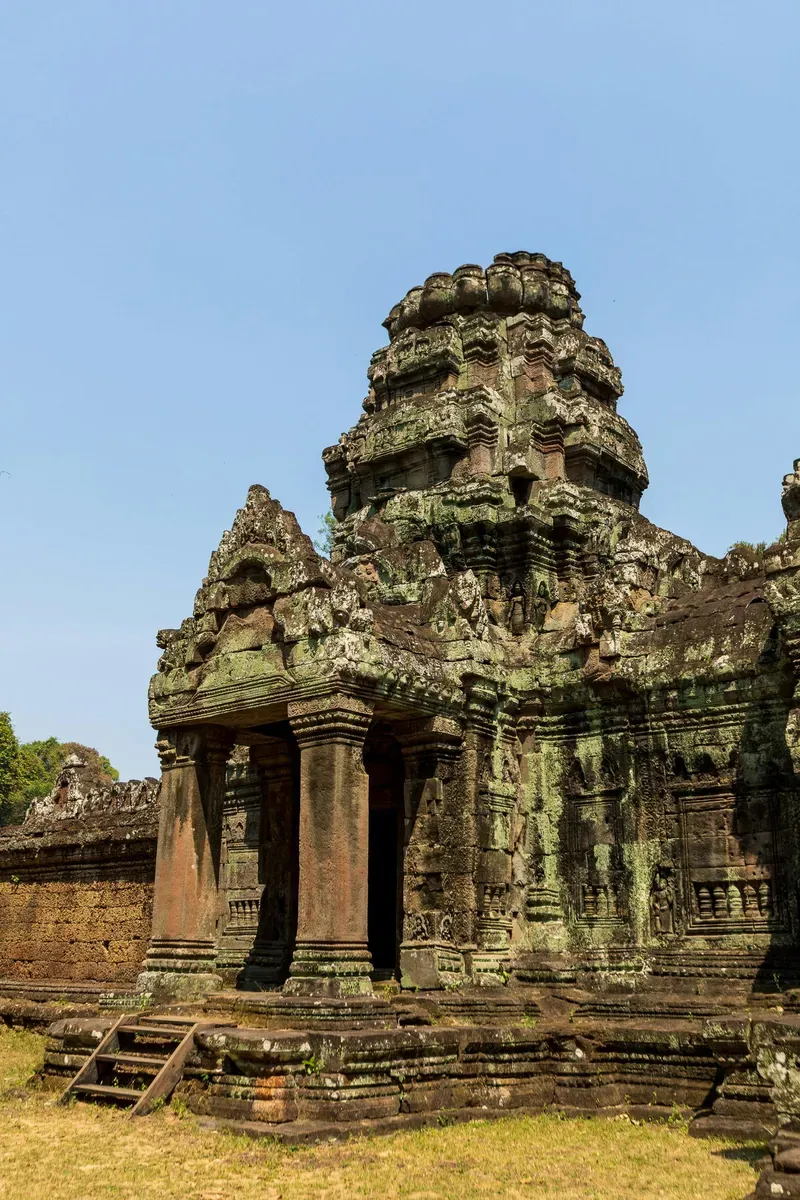
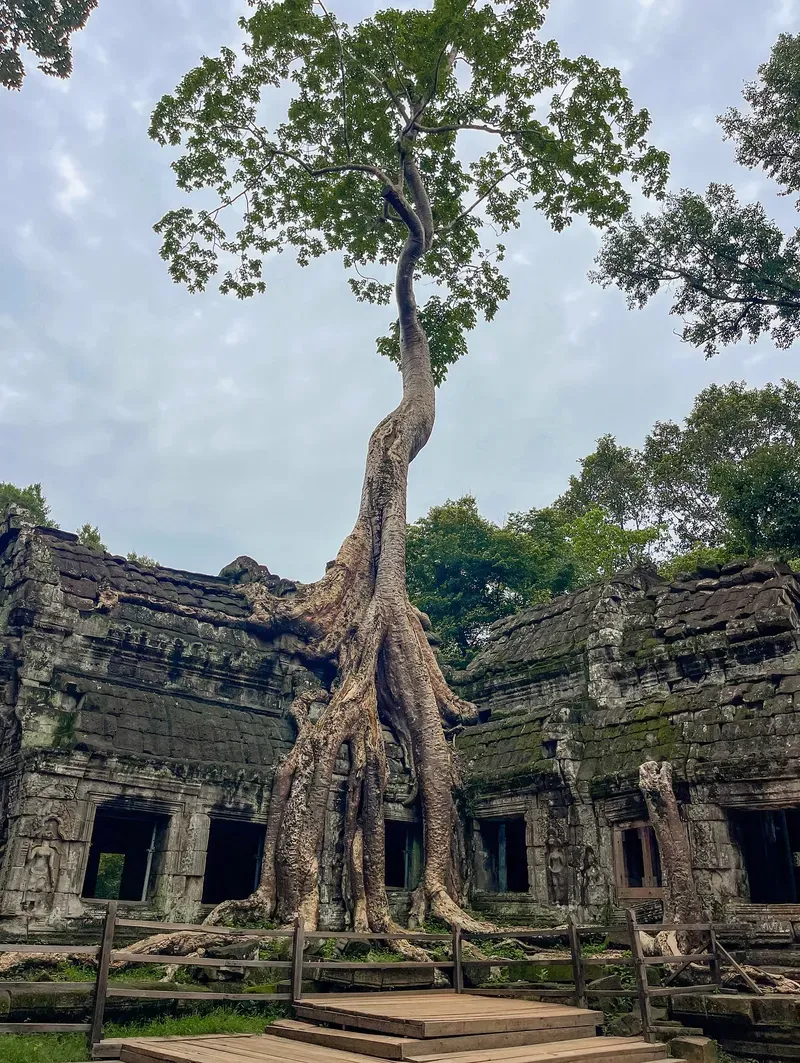
Giant silk-cotton trees grow directly out of the ancient stone ruins here. It is widely recognized as the 'Tomb Raider' temple. The massive tree roots wrapping around the stones create a distinct visual contrast.
This site is widely known as the 'Citadel of Women.' The structure features extremely intricate carvings worked into pink sandstone. Its distinctive material and detailed stonework clearly separate it from the main Angkor Wat complex.
Read what travelers share about their experience visiting Angkor Wat — from practical tips to personal highlights.


You cannot buy tickets at the temple gate. Visitors must purchase an official Angkor Pass at the Angkor Enterprise ticket center on Road 60 or through their official website. A 1-day pass costs 37 USD, a 3-day pass is 62 USD, and a 7-day pass is 72 USD.
The main Angkor Wat temple opens daily at 5:00 AM and closes at 6:00 PM. If you plan to buy your ticket in person on the same day, the ticket office opens at 4:30 AM. Arriving at the reflection pond by 5:15 AM is recommended to secure a spot for sunrise photos.
The Siem Reap-Angkor International Airport (SAI) is 51.4 km from the temple complex. An airport shuttle bus takes about 60 minutes and costs 8 USD to reach Siem Reap town. From town, you can hire a tuk-tuk for 15 USD to 20 USD per day to cover the remaining 6 km to the temples.
Yes, the dress code is strictly enforced to respect the site's religious significance. Visitors must completely cover their shoulders and knees. Tank tops, sleeveless shirts, and short skirts or shorts are prohibited, and scarves used as wraps are often rejected at the upper level.
The temple is not fully accessible due to uneven stones, sand paths, and steep, narrow stairs. Specialized tours do offer specific routes and ramps to view the exterior and lower levels. Elderly visitors may also find the site challenging due to long walking distances of several kilometers and high humidity.
Bring at least 2 to 3 liters of water per person, as the high humidity can cause rapid dehydration. Wear sturdy, closed-toe walking shoes to navigate slippery stones and steep stairs safely. Do not bring drones or tripods, as drones are strictly banned without a permit and tripods are often restricted.
November to February is the most comfortable time to visit because the weather is cool and dry. April brings extreme heat reaching 40 degrees Celsius, while September and October are the peak monsoon months with heavy rain. During any season, visitors should avoid the midday heat between 11:00 AM and 2:00 PM.
Children under 12 enter the archaeological park for free. Parents must present the child's valid passport at the checkpoints for age verification. Older children often enjoy the history and aesthetics, but the steep steps and heat require careful supervision.
Browse verified tours with free cancellation and instant confirmation.
Find Tours